Table of Contents
Introduction
Shape
Imprint
Colors
Stripes
Mouthpiece
Finish
Liner
Packaging
Package Contents
Calculate Value
INTRODUCTION
For those of you reading this who are contemplating the pipe as an investment, be warned: you will not make a profit on these pipes. Because so many confirmed briar and meerschaum smokers are not fond of the pipe, it is unlikely to ever have a great following in the collectibles market. I know of only five substantial collections of the pipe and only one of those (mine) is held by someone who smokes only the pipe and has no other pipe collecting interest! There are perhaps a couple of dozen others I know of who have a small collection of pipes for smoking plus a handful of misguided folks who think they can build a collection of these pipes that will appreciate in value. (These are the ones who often overbid on auctions and, after seeing an identical pipe a while later that sells for a tenth what they paid, abandon the project. I have lost count of how many of these poor souls I have seen come and go over the years.)
It is improbable that these pipes will ever rise to prices that remotely approach those for a nineteenth century meerschaum or a high-end briar from the mid-twentieth century. When the current generation of the few smokers who enjoy these pipes is gone, it may well prove out that today's dealers are correct and they will be worthless. Collect for the love of them, not prospective gain. When bidding on eBay or shopping at a pipe show, remember, these pipes are still fairly plentiful and there will be another one just like it or better along shortly. (There were several million made and they are virtually indestructible!) Even un-smoked pipes in original packaging with literature show up regularly. Don't be gulled into paying a lot for one, no matter how rare you or the seller might think it is.
Even so, there are a few fans, this author among them, and the interval of over 25 years since the last pipe was made has caused some color/shape combinations to be difficult to find. Most, if not all, of the present collectors began with a pipe they liked when they got their first the pipe in the 1960's or 1970's and tried to get another one or two to smoke. Other than those, there are only a handful of folks who collect these pipes for their own sake.
These pipes surface at pipe shows and on the Internet auction sites fairly regularly. At any given large pipe show there usually will be half a dozen or more being offered and the eBay Auction Site may have a dozen or more on any given day. Most pipe smokers and dealers consider these things next to worthless. It is not at all uncommon to find them in the $2 bag or $5 basket on pipe show tables and in a group of damaged pipes and old pipe racks in an auction on eBay. They have an item title like "Nice Pipe Rack with 6 pipes" or "19 used pipes." Since most pipe smokers and dealers consider these things next to worthless, always ask the seller how much he wants for the pipe - often it is priced lower than you estimate. However, a few more knowledgeable dealers have become aware that there are a few collectors who will pay more than trash prices for a desirable pipe. However, it is difficult to match the pipe to the collector so prices are still quite reasonable.
This guide is designed to help you establish the maximum you want to pay for a pipe, not necessarily its fair value. Also note that this is a guide, not a dogma.
WARNING: Auctions can be particularly treacherous because inexperienced bidders can run the price up. Remember, these pipes are still fairly plentiful and there will be another one just like it or better along shortly. If you have some idea as to the value of the pipe, you will not be tempted to overbid, or if you do yield to temptation, at least you will know what you are doing.
This guide will not be satisfactory as a seller's guides for setting prices, although it may be helpful to report the point value of the pipe. If you do choose to report the point value of a pipe you have for sale please identify it as "nn points on the Taylor scale." I recommend starting your auction at $2-10 to attract early bidders. There are some regular purchasers of these pipes who won't participate if the opening bid requirement is not a bargain, although for a pipe that fits several collections well, bids often escalate rapidly.
Most serious collectors use some kind of rating system to decide what a pipe might be worth at a sale, show, or auction. The systems used by briar and meerschaum smokers have great limitations when one attempts to apply them to these quirky pipes. Try something like this: decide what is the most you would pay for an un-smoked example of a pipe you don't have represented in your collection that came in its complete original packaging with literature and is in perfect condition in every respect. Pipes like this are going to be few and far between, but one must begin somewhere. Then reduce that amount by twenty percent for each deficiency. Apply each reduction in this order: packaging, usage, finish, mouthpiece, shape, color, imprint.
The opposite approach is to build a value using the notion that any pipe worth less than $5 is not going to be attractive to you. Increase that value by a third for each factor in this order: imprint, color, shape, mouthpiece, finish, usage, packaging.
Before you run a pipe through the rating system, here are the factors to look for and some guidelines for choosing a rating for each. If you are unsure about any of the items under consideration, always choose the lower point value. Except for SHAPE, the list of choices within each category is from lowest to highest value.
SHAPE
Apple, Bent, Billiard, Bulldog, and Pot are the original five shapes which were offered from the very beginning until the bitter end. They are less valuable than Dublin which entered the lineup at about the same time as colors began being offered in 1967. The Author and Canadian shapes began being offered about 1973 and are even less often seen than Dublin. Offered for only a short while, the Giant Pot is extremely rare and is the most valuable shape of all. The Giant Pot and Pot are identical except that the interior diameter of the tobacco chamber is 7/8" instead of 3/4". Altogether the pipe came in nine shapes, the featherROCK the pipe series came in two shapes, THE SMOKE in four shapes (which were called "designs"), and Venturi pipes in three shapes (not shown).
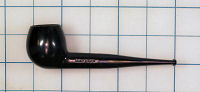
Apple the pipe
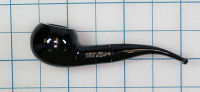
Author the pipe
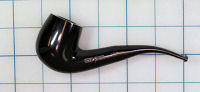
Bent the pipe
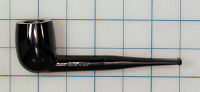
Billiard the pipe
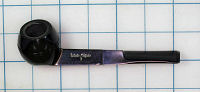
Bulldog the pipe
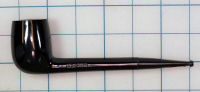
Canadian the pipe
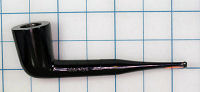
Dublin the pipe
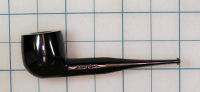
Pot the pipe
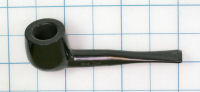
Giant Pot the pipe
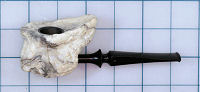
Blue Ridge featherROCK the pipe
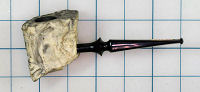
Sierra featherROCK the pipe
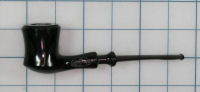
Berkeley THE SMOKE
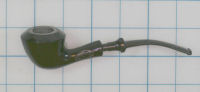
Graduate THE SMOKE
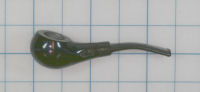
Village THE SMOKE
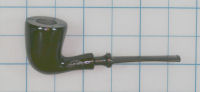
Woodstock THE SMOKE
Venturi pipes were produced in only three shapes: Bent, Billiard, and Pot. Because one shape is no more difficult to find than another, all Venturi and THE SMOKE shapes have equal value.
Hirschl & Bendheim ColorCob and Tar Gard pipes were made in a wide variety of shapes, but, since they do not have bowl liners and were not manufactured nor packaged by Super-Temp, they are only incidental to collectors of the pipe.
IMPRINT
Look for these problems with the imprint on a pipe:
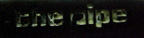
An imprint that is a different color from the rest of the shell is usually caused by a less than meticulous buffing of a colored pipe to black. It also occurs when a pipe is carelessly repainted a different color.
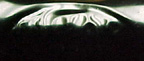
A less than skilled craftsman may wind up with a paint-filled imprint when repainting a pipe.

Infrequent or sloppy cleaning of a pipe may lead to a dirty imprint. If allowed to go too long, this can be surprisingly difficult to correct.

The imprint may not be crisp and clear. This was sometimes a factory problem with Real Briar and Rare Wood the pipe and sometimes is a factor of wear.
Maximum points are awarded for Imprint is clean, clear, and same color as rest of shell:
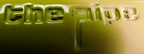


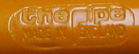
Luckily all but one of the pipes marketed by Venturi, Inc. in the 60's and 70's are clearly imprinted with the brand's name. The exception is the featherROCK pipes which have no markings at all and must be recognised by the materials and shapes .
COLORS
Venturi pipes were made in five colors (Black, Blue, Green, Red, and White). Other colors from this line have also been reported, but those I have seen were apparently repainted later, not original production. A sufficient number of Purple Venturi pipes have been reported to make it possible that these were factory paint, but those I have examined are actually faded Venturi red or repainted after-market although I have acquired an Orange pipe that is apparently factory paint.
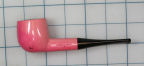
THE SMOKE had four published colors; Red, Blue, Yellow, and Black. White THE SMOKEs have been found in all four designs and California Style Berkely and Graduate, a Gray Graduate and a Pink Woodstock have also been discovered.
The featherROCK the pipe series came in three colors - Green, Grey, and Brown.
the pipe came in a wide variety of colors and materials. Before proceeding with the discussion, this important disclaimer must be made. This entire section is the product of the author's own ideas. Although other collectors have been consulted and people involved in the production and marketing of the pipe have been interviewed, they all admit that their whole discussion of the topic is as much speculation as specific recollection. In short, there are no reliable records, only bits and pieces from advertisements, pipe shop catalogs, and the notoriously undated The Story of the pipe inserts in packages of the pipe. The only absolute facts are:
1) Originally the pipe was offered only in Black, soon afterward called Ebony. Some colors were added in 1967, more even later. Colors were dropped and added and there were changes in color names as well.
2) According to the production supervisor of the pipes, the paint method was changed "about halfway through the production" (that would be 1970 or so) from two-part epoxy paint to electrostatically applied acrylic paint.
Visit My Collection to see all the colors presented in tables of colors and shapes.
The first colors offered were called Oyster White, Burnt Orange, Avocado Green, Ash Grey, Tan, Federal Gold, and Horizon Blue. Two of these, white and gold, did not change their nomenclature throughout the life of the pipes although there are (sometimes huge) variations in hue.
Oyster White ranges from a creamy cast to almost grey.
Burnt Orange has even more shades. And there is an outer box which just says just "Orange" although there is no other documentation for that color name. Presumably, the differences in shade are again more a matter of variations of paint than being different colors.
Avocado Green ranges from almost olive to nearly chartreuse. Apparently another shade of green called Sage Green was offered between 1970 and 1972. It is unlikely that the production sequence of these two green colors will ever be resolved with any degree of certainty. Since neither Author nor Canadian shapes have been found in Sage Green, it is most likely either a temporary replacement for Avocado Green or both colors were offered simultaneously. Dark green pipes have also turned up, but the literature does not document this color at all. At first this color was thought to be added by an owner, but the increasing number of finds makes it almost certain that it was, at some point, a production color. It is impossible to tell if Forest Green (my name for the color) was used in early or late production. Later can be argued because, as Venturi developed, colors were added and changed more rapidly than the literature could be updated. However, earlier can be argued because Author and Canadian shapes have not been found and, like all the certain earlier colors, there are fewer of any shape seen in the Forest Green.
Ash Grey was the first shade of grey mentioned as an available color among those in the earliest brochure that offered colors. It was never mentioned again in subsequent brochures, being replaced by Morocco Grey which is a lighter shade. The two discernible shades of grey are not easily distinguished unless an example of both are in hand. Morocco Grey in turn disappeared from the literature about 1970. Neither grey has turned up in the Author or Canadian shapes, nor have I seen either one in Later packaging
There is uncertainty about the Tan color because the only documentation of it is in art for 1969 and 1972 pipe shop catalogs. After many years of searching, I came to the conclusion that the color is what I had believed was an older shade of Federal Gold. And I seem to have been wrong. After I bought several pipes on eBay with over-exposed photographs and descriptions of "Tan" which turned out in hand to be Mocha Brown, I now believe they are different names for the same color.
Federal Gold is also difficult, ranging from brownish to canary yellow. For a time, I believed the brownish hue to be the illusive Tan color but now believe the difference to be due, at least in part, to the change in painting method. This is confirmed by the pipes I have in Early packaging are the brownish shade and those in Later packaging are yellower.
Horizon Blue, a robin’s egg or very light blue, is in the earliest brochure. It was replaced in the literature almost at once with English Blue, a much darker, richer color, which thenceforward maintained some consistency over the remainder of the production life of the pipe In fact, there is one promotional piece that shows a photo of Horizon Blue labeled English Blue. If this theory of color replacement is correct there were never any Canadian or Author shapes made in Horizon Blue because these shapes were introduced after the change from Horizon to English Blue paint colors. Should a pipe be found that proves this incorrect, this color sequence theory will need to be revisited.
The red colors are particularly problematical. An early brochure mentions Maroon, but, after a hiatus of several editions, it reappears in what is believed to the last edition as Persian Maroon.
Burgundy Red first appears in a brochure issued around 1973. Prior to that it appeared in some catalog art as Vermillion (sic).
A 1969 advertisement says Raspberry is an available color. In the brochures, California Rosé first appears in 1973. It is still unclear whether this is two names for the same color or two colors that appeared sequentially or perhaps even concurrently. There is a discernible difference between the two, although it can be difficult to distinguish them unless they are both in hand.
Three pipe shop catalogs offer Melon as an available color, but a very similar color is shown in one of the brochures as Coral. The current thinking is that again we have two names for the same color. Giving the Venturi brochure precedence, I am calling the color Coral. By whatever name, this color is extremely rare. It may be difficult to distinguish between the older Federal Gold, Burnt Orange and Coral if an example of each is not in hand.
The only reference in the literature to Imported Briar pipes with pyrolytic graphite bowl liners is in a 1969 Iwan Reis catalog. Although it offers sandblasted models too, so far these have been found only in the pipe - MADE IN ENGLAND line. There are no references to Rare Wood pipes with bowl liners but we have examples and prototype designs. The kind folks at Venturi and Super-Temp have confirmed that they did indeed make and sell Rare Woods and Real Briar the pipe for a time.
The multicolored "California Style" pipes were marketed at first as having three patterns: Big Sur, Malibu, and San Francisco. However, while some pipes can be categorized, each pipe is truly unique and most do not follow that plan. An irony in collecting these is that they were so unique that quite a few were sold to folks who put them aside un-smoked in original packaging expecting them to appreciate in value. As a result, they are still quite available yet sell for a premium to other, more rare colors!
Another irony in collecting these pipes is that the fairly common colors of Burgundy Red and English Blue bring higher prices than the truly rare colors, such as Coral, Raspberry, the Greys, and Mocha Brown.
FASHION STRIPES
Fashion stripes are all in a color contrasting with the basic color of the shell and circle the top of the bowl. The striping was done by hand (as was the entire paint job for that matter) and the workers were allowed great latitude in applying them. They were called Rally Stripes from 1967-1970, then Fashion Stripes. Some distributors called them Racing Stripes. At first, they were offered only as white stripes on Burnt Orange or orange stripes on white, tan, gold and black Pot and Billiard shapes. Fashion Stripes of many colors eventually were offered on Burgundy Red, Maroon (Persian Maroon), California Rosé, Burnt Orange, English Blue, Ebony, Federal Gold, Oyster White and perhaps Coral in Bent, Billiard, Bulldog, Canadian, and Pot shapes. Venturi took great pride in announcing "All stripes hand-painted originals—no two alike".
Here are some of the variations. Each pattern is described from the top down: N = narrow stripe, M = medium, W = wide and the numbers indicate a color. Thus M-M-M 1-2-1 = three medium stripes of one color flanking a second color. The basic color of the pipe is not included.
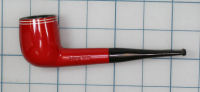
N-N 1-1
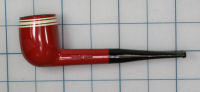
M-W-M 1-1-1
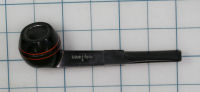
N-N 1-1
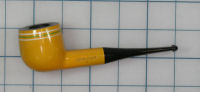
N-N-N 1-2-1
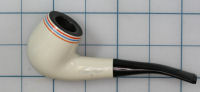
N-N-N 1-2-1
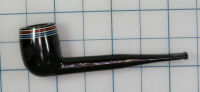
N-N-N-N-N 1-2-1-3-1
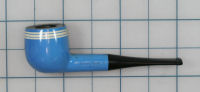
M-W-M 1-1-1
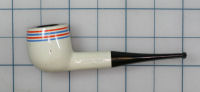
M-M-M-M 1-2-1-2
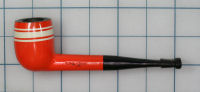
M-W-M 1-1-1
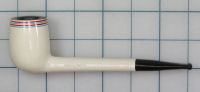
N-N-N-N 1-2-1-2
The last slide example is the All-American (sometimes called Americana) striping pattern. It is two red alternating with two blue stripes on an Oyster White pipe. These All-American pipes are the only known thoroughly consistent pattern of striping and were offered on all five shapes that were striped. In the early days of striping, Ebony pipes also had an All-American pattern on Billiard (the sixth slide above), Bent and Pot shapes. There are five stripes on these - white, red, white, blue, and white. It is not likely that the Bulldog shape could accommodate five stripes and the pattern on Ebony pipes was apparently discontinued before the Canadian shape was introduced.
It is unlikely that any collector will ever achieve the goal of having an example of all the possible combinations. Some collectors place a premium on striped pipes, some think them worth less.
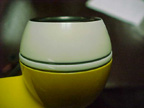
Bulldogs were sometimes made with the top half of the bowl in a contrasting color. These were called Buff Designs.
Regardless of the pattern, there are two factors that would make a striped pipe less valuable to a collector.
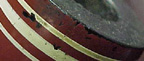
First is that the paint is damaged.
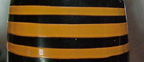
Second is that the stripes were unevenly applied:
MOUTHPIECE
There are many types of problems possible with mouthpieces. If there is more than one deficiency, you should select the worst, i.e. nearest the top of the list.
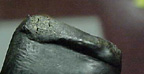
Mouthpiece lip and/or bit crushed
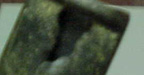
Mouthpiece bitten through
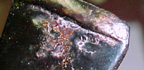
Mouthpiece several deep tooth indentations
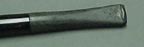
Mouthpiece badly oxidized
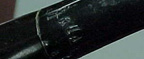
Mouthpiece severely scratched or gouged

Mouthpiece few tooth indentations or other minor damage
Mouthpiece replaced with wrong length and/or shape. Replacement mouthpieces may be a correct fit and design in which case it is impossible to distinguish them from originals. On the other hand, a replacement mouthpiece may not have the o-ring groove on the tenon or will be too long or too short or, with Author and Bent and all THE SMOKE, will not have the correct bend. Sometimes the diameter of the mouthpiece and shank will not match. One can assume a replacement mouthpiece if other use and wear factors show that it is unlikely to be original. See below for original mouthpiece specifications.
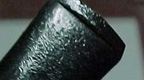
Mouthpiece many light toothmarks, no indentations
Mouthpiece minor damage unrelated to tooth-marks. Same as "severely scratched or gouged" only less so
Mouthpiece few light toothmarks, no indentations. Same as "many light toothmarks" only less so
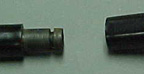
Mouthpiece missing o-ring

Original mouthpiece in new condition
Original mouthpiece lengths are measured in inches from the joint of the shank to the tip of the lip on the underside of the mouthpiece:
Apple, Author, Billiard and Bulldog - 2.7
Bent - 2.5
Canadian - 2.0
Dublin - 3.0
Pot and Giant Pot - 2.6.
FINISH
The finish of the pipe is also important, but more important for Ebony or Oyster White than for, say, Raspberry or Mocha Brown. Even some pipe shop pipes that have never been smoked often show some paint damage from being in a drawer or whatever. The more chips and scratches, the less a collector would want to pay for a pipe. Some colors seem to be more fragile than others and perfect specimens are difficult to find. There are too many flaw combinations possible to present them all here, but these are examples of the most extreme as well as an example of the basic descriptors. These pipes are nearly indestructible, but once in a great while a broken pipe turns up. I have broken a couple myself by smoking them too hot and trying to perform various ill-advised procedures on them.
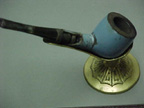
Broken shell or other major damage.
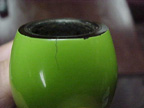
What appears to be a scratch ...
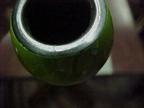
... is actually a split shell and liner.
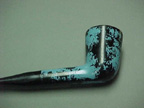
Paint over half gone. This would also be the selection for a re-painted pipe. There are four places to look for signs that the pipe has been repainted.
First is that the logo is paint filled.
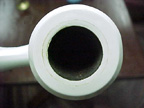
Second, the top of the bowl is painted. Venturi and THE SMOKE pipes rim tops were generally, but not always, painted. the pipe pipes, never!
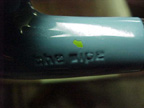
Third, if the paint is chipped, inspect the underlying color. If it is any color other than black, the pipe has been repainted. Of course, a careful craftsman will buff off all the old paint before applying a new finish so black is not a positive indicator.
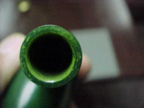
Finally, remove the mouthpiece and look inside the mortise of the shank. If you see signs of a different color of paint then you are probably looking at a repainted pipe. A smoker might prefer a repainted pipe, but a collector should prefer some damage to the paint over a repainted pipe.
There are an infinite number of possible combinations of scratches and chips. It is largely a matter of personal preference and perception as to which of the combinations of chips and scratches one chooses. The important thing is that the choices are in order from lowest to highest points and it is probably the wisest course to err on the side of lower point values, especially when trying to value a pipe from photographs, such as on eBay for example.By way of definition:
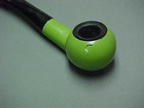
This is a scratch ...
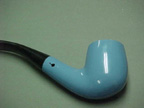
... and this is a chip.
Some of the other flaws one might notice in the finish.
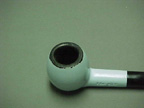
Paint stained or discolored. White pipes especially may have nicotine stains that cannot be removed. Or, as in this case, improper soaking has caused the paint to become uneven.
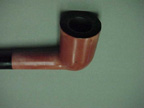
"Chigger bites" around the edge of the rim.
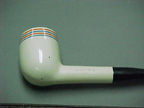
Dulled or worn finish. Also often caused by too aggressive soaking. Compare to the red and maroon pipes shown with Fashion Stripes above.
Shop-worn new pipe. Little nicks and abrasions caused by careless storage in a pipe shop drawer.
This is what you're looking for - a factory fresh finish.
LINER
Worst, of course, is a missing bowl liner or one which has separated from the shell. This usually happens because the pipe is smoked too hot and attempts are made to clean it up or run a pipe cleaner through the flue while it is still very hot. This Ash Grey Billiard and Rare Woods Bulldog are examples of the results of this ill-advised behavior. (The most common cause of the pipe smoking hot is over-packing the tobacco chamber. Tobacco should be just dumped into the bowl loosely and then tamped only enough for combustion to be maintained.)
Other types of damage to the bowl liners are —

Liner interior scraped and damaged.

Liner interior scratched.

Liner rim has more than two nicks.
The next several choices are self-explanatory. The degree of use can sometimes be judged by the amount of residue left on the rim. It is difficult to remove and often leaves abrasions if over-done.
 |
The pyrolytic graphite liner in an un-smoked pipe has a silvery sheen that, once heated, disappears and cannot be restored. (I have seen it tried by rubbing a pencil or graphite on the liner after it has been cleaned up but that wipes off with a swipe of the finger.) If that silvery sheen is not present or wipes off, the pipe has been smoked at least once. There are also usually some little rough spots on an un-smoked liner that will burn off with the first or second use and cannot be restored. |
PACKAGING
If you are lucky enough to have an opportunity to get a pipe in its original packaging, here are the criteria for judging it. Select one from this section even if your example is incomplete. You will get to choose the contents in the PACKAGING CONTENTS section.
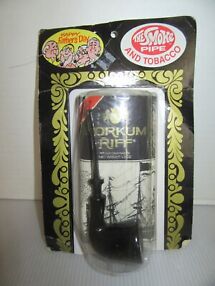
Five of the six bubble-paks discovered so far are shown above. The packaging that was used for Venturi and Tar Gard pipes after Bissell acquired the company is shown here. The only literature on Venturi pipes (introduced around 1972) found so far is that on the packaging of the Mr. President and Spirit of '76 lines. THE SMOKE pipes have also been found in some of these packages. Some of these have other stickers such as "Happy Father's Day."
A bubble-pak is either incomplete, opened but complete, or unopened. Choose one and limit your choice in PACKAGE CONTENTS to "Any bubble-pak," regardless of contents.
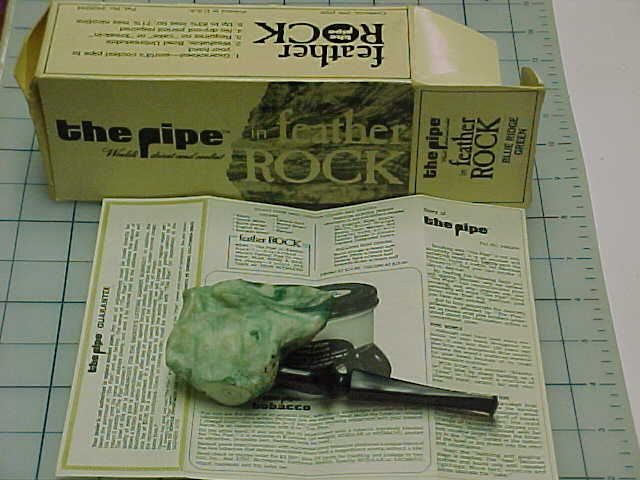
Packaging for the featherROCK the pipe. Pipe shells for the featherROCK Collection were made with polyester resin, not plastic, and have pyrolytic graphite bowl liners. These pipes were packaged in a cream & grey box with black print on the cream part and white print on the grey. In the box is an edition of "The Story of the pipe" brochure customized for featherROCK pipes.
It does not matter whether you choose Early or Later packaging for these.
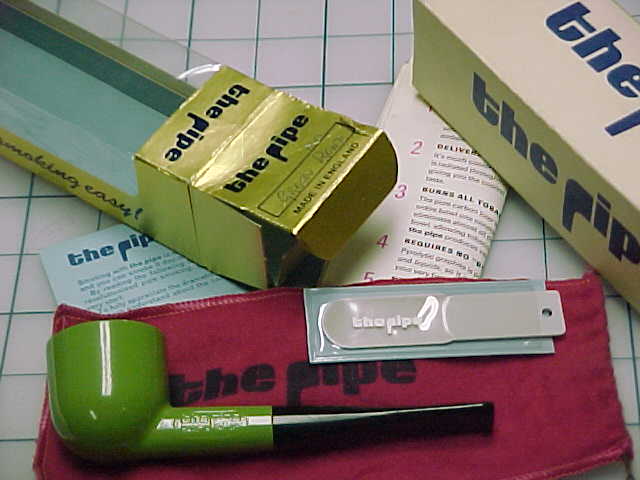
the pipe - MADE IN ENGLAND came in a velveteen sock inside a cardboard/clear box with the literature beneath the pipe. A plastic pipe scraper imprinted the pipe was also included in its own little plastic sock. All this was contained in an open-ended white cardboard sleeve.
Again, it does not matter whether you choose Early or Later packaging for these.
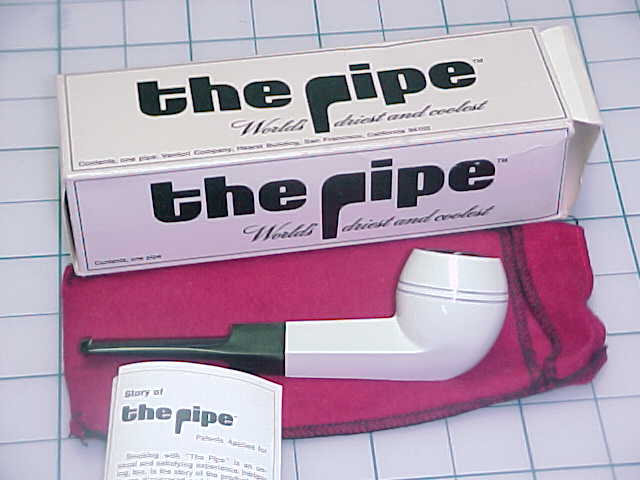
Early the pipe packaging. Up through 1971, the pipe sold in a cardboard box the same color as the pipe (except that black pipe boxes were brown). All of the printing on the box was always in black. The pipe was in a red velveteen sock inside the box. "The Story of the pipe" brochure was stuffed in the box around the sock.
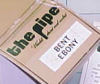
Sometimes the end flap of the box had a box in which the shape and color of the pipe were printed.
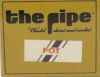
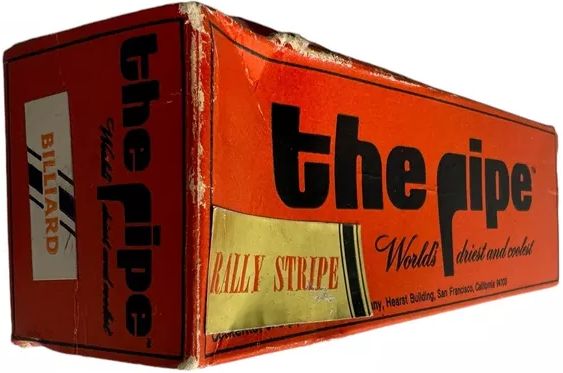
If the pipe in the box had Fashion Stripes the end flap might have the addition of stripes on the label. Perhaps even a label added specifing "Rally Stripe."
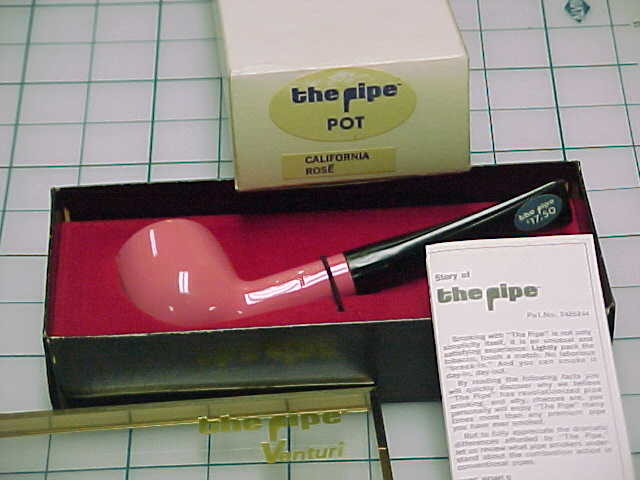
Later the pipe packaging was a black cardboard box with a transparent cover on which was printed "the pipe by Venturi" in gold lettering.
Inside the box, the pipe had a price sticker on the mouthpiece and was held by a black elastic band in a shaped cutout of the pipe on a red or black cardboard insert. (Often on eBay and even from shops, the pipe in the box does not match the cutout; a sure sign of not being the original packaging!)
"The Story of the pipe" brochure was laid flat under the insert.
This box was contained in a white cardboard outer box with two labels on the end flap - oval with the pipe and a shape name over an oblong with the color name.
Another variant of this later packaging had a sticker on the lid of the inner box shown in this pipe's discussion. I doubt that this one ever had an outer box.
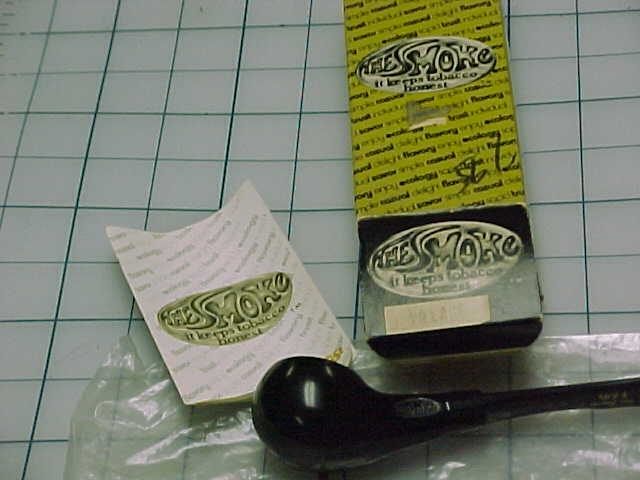
THE SMOKE pipes were packaged in a clear cellophane sleeve inside custom cardboard boxes with a brochure insert entitled "The Promise." which had a later version. An oblong white area on an end flap was sometimes stamped with the pipe's shape in color-matching ink.
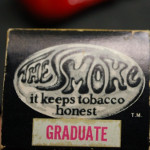
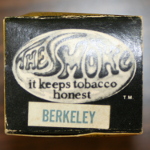
Again, watch for mismatches of the stamp and the pipe inside and, of course, always choose "THE SMOKE packaging."
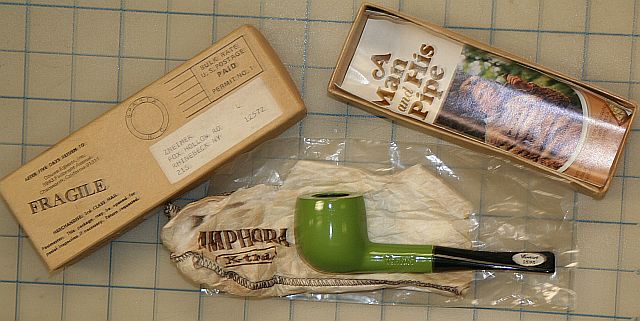
Rarely found, this packaging was for Venturi pipes offered by Amphora Tobacco producer Douwe Egberts points coupons included with pouches of tobacco plus a small fee. The Outer box was taped closed and the pipe was in a cotton-lined paper pipe sock labeled Amphora X-tra with a tobacco brochure beneath.
PACKAGE CONTENTS
Any bubble-pak. You will need to select this one even after choosing one of the options in the previous section.
No package contents. You will need to select this even if you already chose No Packaging in the previous section. There may be situations where you choose No Packaging in the previous section, but choose one of the descriptors here. For example, you acquire a pipe with nothing but the price sticker.
Factory price sticker. Pipe shop price stickers do not count. Only these:


Stickers have not been seen on the pipe - MADE IN ENGLAND nor on featherROCK the pipe.
The bowl insert in briar the pipe entitled "To: PUCHASERS OF "THE PIPE", or "200 years of pipe smoking in America" in Venturi bubble-paks, and coupons, advertisements, etc. should not be considered "literature."
The remainder of the choices in this section are simply a matter of comparing what you have to the complete packaging above and choosing the nearest description.
CONCLUSION
You're almost ready to have a look at a pipe as best you can and tote up the points. The next step will be to convert the points to dollars. That is simply a matter of multiplying the points by your conversion factor. To establish your conversion factor you must know that the most points a pipe can earn is 100. Then think about the most you would consider paying for a perfect pipe - that is, un-smoked in original packaging with literature. Divide that price by 100 to get your conversion factor.
To give you some additional guidance here, nearly all Briar smokers and most pipe dealers are inclined to think a typical the pipe is fairly priced at $5 and a perfect pipe is generously priced at $25. If 100 points equals $25, they would pay about a quarter (25÷100=0.25)of the point value in dollars. Therefore a pipe that earns 24 points would be worth $6.00 (24×0.25) to them. If you think $50 is plenty to spend on one of these pipes no matter how perfect it is, your conversion factor is 0.5 (50÷100) and a 24 point pipe is worth $12.00 (24×0.5) to you. And so on.
Alternatively, follow a few auctions on eBay for a while - use only auctions for single pipes. I did that in January, 2019, and here are the results: there were 71 the pipe, 23 THE SMOKE, and 15 Venturi pipes offered. That's 109 of these pipes in just that month! Over half of them got no bids at all. The average winning bid for the 48% that sold was $11.45.
So, if you run into a dealer asking $75 for a 34 point pipe or $55 for a 21 point pipe (and I have) at least you will know that he thinks a great deal more of it than most dealers and collectors. You can then make a more realistic offer or drop out of the contest. In case you didn't know, many dealers in "estate" pipes deliberately price their offering too high in expectation of a counteroffer. They enjoy the bazaar-type haggling. Others don't really want to sell the pipe, but feel obligated to offer it for sale because it's their business or the spouse says "Get some of those !*$#^!%! pipes out of here!". In these cases, they can have their cake and eat it too by asking an outrageous price.
Similarly, if you are following a pipe auction and bidders offer $135 for a 12 point pipe or even $150 for a 50 point pipe (and it happens once in a while) you know that it's no longer the pipe at issue, but the bidders' egos. Don't get sucked into such foolishness. Another pipe just like it or better will be along - and the price will be much more reasonable.
A final note: Do not attempt to apply this valuation guide to any pipe not imprinted on the shank the pipe, THE SMOKE, or Venturi. It is not relevant to any other pipes.
You can play with a system like this endlessly until you arrive at what works for you. Or not! Good luck!